
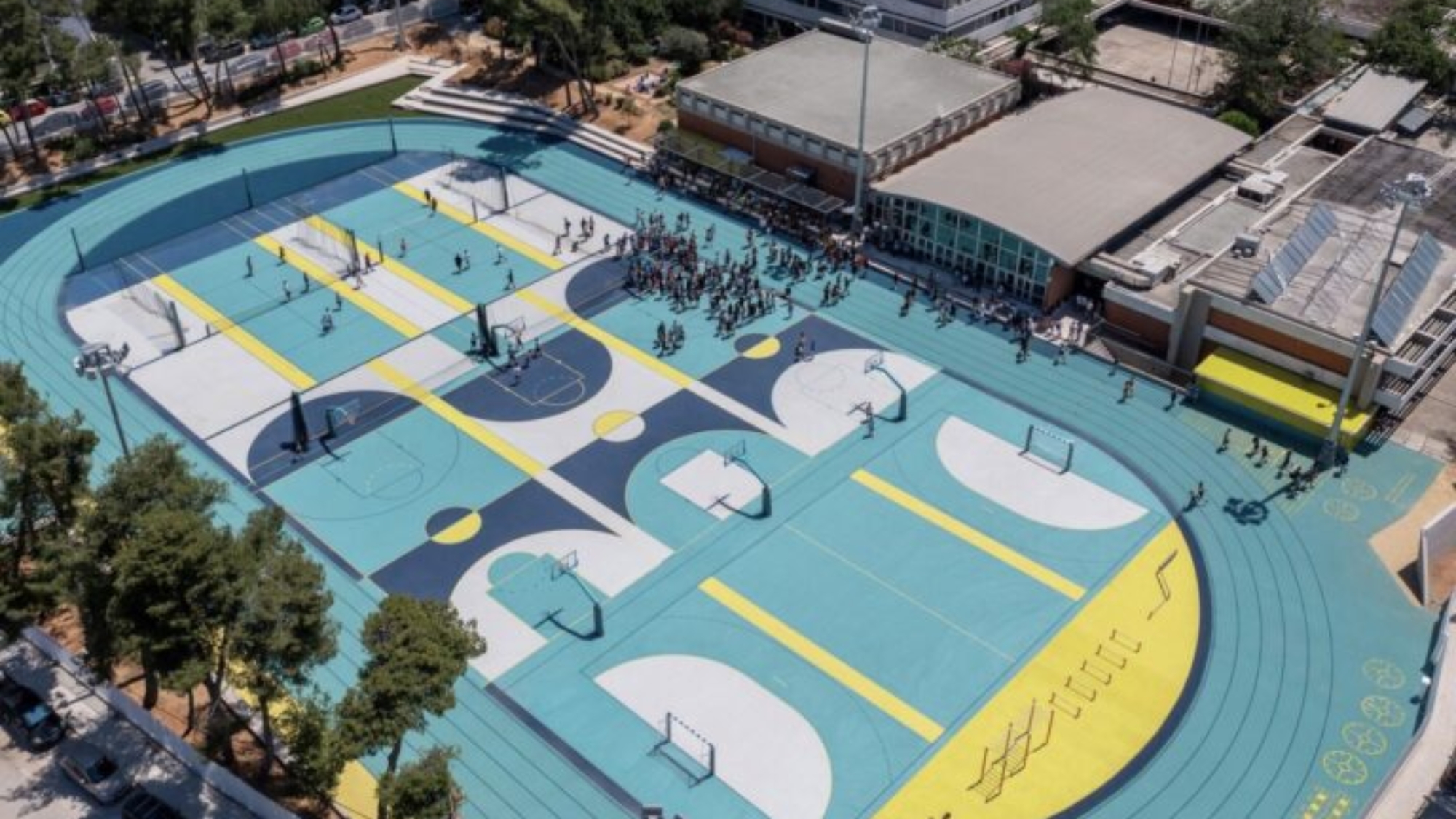
Designing a comprehensive outdoor sports facility requires careful planning, attention to detail, and consideration of the needs of athletes and users. A well-designed facility not only enhances performance but also ensures safety, comfort, and long-term usability.
1. Assess the Site and Space
Before starting the design, it’s essential to evaluate the site:
Measure the available area accurately.
Consider natural features like slopes, trees, and sunlight orientation.
Assess drainage and water flow to prevent flooding or water accumulation.
2. Select Appropriate Sports Surfaces
The choice of flooring or surface is critical for safety and performance:
Synthetic turf for football or multi-use fields
Rubber tracks for jogging and running
Polyurethane or epoxy surfaces for basketball, volleyball, and multi-purpose courts
Ensure surfaces are durable, weather-resistant, and compliant with international sports standards.
3. Plan Functional Layouts
Design the layout to optimize usability and accessibility:
Separate zones for different sports (football, basketball, running tracks)
Include warm-up and stretching areas
Provide safe spectator areas with clear visibility
4. Consider Safety and Accessibility
Safety should be a top priority:
Install proper fencing to prevent unauthorized access
Use shock-absorbing surfaces in high-risk zones
Include ramps and accessible pathways for individuals with disabilities
5. Provide Supporting Facilities
Complete outdoor sports facilities include:
Benches, lockers, and shaded seating areas
Drinking water stations and restrooms
Lighting for evening or low-light activities
6. Account for Environmental Factors
Design facilities that withstand local climate conditions:
Use UV-resistant and heat-tolerant materials for hot regions
Provide shade structures or trees to reduce heat exposure
Ensure proper drainage to handle rainwater
Conclusion
Designing a comprehensive outdoor sports facility requires a holistic approach that balances safety, performance, aesthetics, and sustainability. Proper planning, selection of materials, and attention to the needs of users will result in a facility that serves athletes, schools, and communities effectively for years to come.
O my friend — but it is too much for my strength — I sink under the weight of the splendor of these visions! A wonderful serenity has taken possession of my entire soul, like these sweet mornings of spring which I enjoy with my whole heart. I am alone, and feel the charm of existence in this spot, which was created for the bliss of souls like mine.
I am so happy, my dear friend, so absorbed in the exquisite sense of mere tranquil existence, that I neglect my talents. I should be incapable of drawing a single stroke at the present moment; and yet I feel that I never was a greater artist than now.
When, while the lovely valley teems with vapor around me, and the meridian sun strikes the upper surface of the impenetrable foliage of my trees, and but a few stray gleams steal into the inner sanctuary, I throw myself down among the tall grass by the trickling stream; and, as I lie close to the earth, a thousand unknown plants are noticed by me: when I hear the buzz of the little world among the stalks, and grow familiar with the countless indescribable forms of the insects and flies, then I feel the presence of the Almighty, who formed us in his own image, and the breath of that universal love which bears and sustains us, as it floats around us in an eternity of bliss; and then, my friend, when darkness overspreads my eyes, and heaven and earth seem to dwell in my soul and absorb its power, like the form of a beloved mistress, then I often think with longing, Oh, would I could describe these conceptions, could impress upon paper all that is living so full and warm within me.
Add a Comment